Why Michael Jordan doesn’t matter

posted by Dave on Jul 3rd, 2010

Today’s column from the Kankakee Daily Journal and The (Ottawa, Ill.) Times

Why Michael Jordan doesn’t matter

The WISCH LIST

July 3, 2010

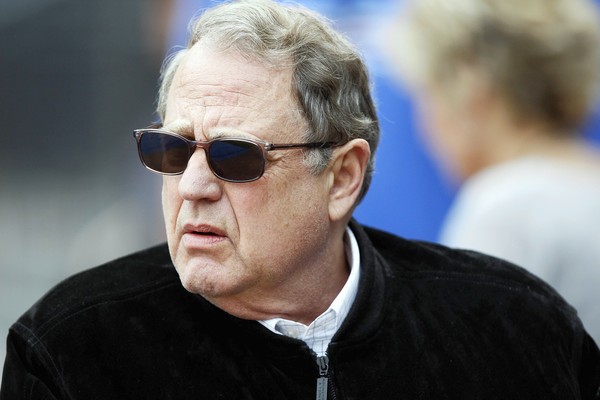
The guy’s legend remains larger than life, his image is bronzed for posterity at the House that He Built, and he’s still – and likely always be – regarded as the greatest to ever play his sport.

But Babe Ruth doesn’t scare a soul anymore.

So, why should Michael Jordan?

That’s the question I’ve been pondering the past few weeks as I’ve weighed the reasons why uber-free agent LeBron James should sign a contract with the Chicago Bulls this summer – and why he shouldn’t.

There may be plenty of good reasons why James should shun Chicago – actually, I can think of 30 million of them (the amount of money that Cleveland can pay him above any other team) – but I’ve also come to the conclusion that His Airness should not be one of them.

Because Michael Jordan doesn’t matter.

At least, he shouldn’t. Not to LeBron. Not in the way many think he should.

Now, before you try to punch me with a fistful of NBA championship rings or send Mars Blackmon to heckle me at work, allow me the chance to explain.

Of course, Michael Jordan matters. In the landscape of Chicago sports, no athlete has ever mattered more. And it’s unlikely that anyone ever will.

Jordan – with that wagging tongue, those aerial acrobatics and, of course, the six championship rings – turned himself into an icon nonpareil during the 1980s and ’90s while transforming the Chicago Bulls into a global brand recognized from Berlin to Basra to Beijing.

A dozen summers after Jordan last donned a Bulls jersey, his shadow still looms large over the United Center. And during the past month, that’s left many asking why LeBron James would want to stand in it.

But what I’ve instead come to wonder is why he wouldn’t.

Because, for a player as great as LeBron, the specter of Michael Jordan shouldn’t be viewed as a curse. It should be viewed as a blessing.

Consider this: In 2004, before his career was irreparably tarnished and his Hall of Fame candidacy (almost certainly) destroyed by admitted steroid use, Alex Rodriguez was well on his way to being considered one of the greatest baseball players of all-time. Maybe the greatest.

In an attempt to attain such a lofty stature (and championships), A-Rod wanted to join – not run away from – the team that the greatest of all-time, Babe Ruth, called his own for 15 seasons. That’s because, over time and many titles, the Yankees have become something truly special in professional sports: A franchise of legends that, in turn, attracts legends.

The seven World Series rings that Ruth won and the best-ever reputation he built in the Bronx didn’t intimidate Rodriguez. Instead, A-Rod was almost certainly drawn to New York at least in part because of those things.

Playing for the Yankees just meant more than playing for anyone else.

Love them or hate them, the Yankees are baseball’s undisputed Gold Standard. And by coming to Chicago, LeBron James could potentially make the Bulls the same. He could turn them into the NBA’s version of the Yankees.

Or, at the very least, the Lakers and Celtics, two franchises that in Kobe Bryant, Magic Johnson, Kareem Abdul-Jabbar, Jerry West, Larry Bird and Bill Russell boast probably six of the 10 greatest basketball players of all-time, yet don’t seem to scare any current players away.

You’ve never heard anyone saying that Kobe should have left Los Angeles to make his mark because Magic and Kareem had already made theirs there. Really, even mentioning such a thing sounds ridiculous. It should sound the same way in Chicago, too.

Winning as a Laker has hardly diminished Kobe’s legacy. Rather, it has enhanced it. That’s because the Yankees, Lakers and Celtics are all special franchises. The Chicago Bulls could be. They can be more than just Michael Jordan.

And LeBron James is the one who could accomplish that.

If he decides to sign with Chicago, LeBron has the unique opportunity to not just make himself legendary, but to potentially make a franchise truly legendary, as well.

Chances like that don’t come along very often. And for a guy looking to leave a legacy, well …

That’s one for the history books, Babe.

Summertime Chi: 5 hot spots to visit

posted by Dave on Jun 26th, 2010

Today’s column from the Kankakee Daily Journal and The (Ottawa, Ill.) Times

Summertime Chi: 5 hot spots to visit

The WISCH LIST

June 26, 2010

This past Monday marked the official start of summer, a date that I’ve always found ironic because all it truly means is that the days start getting shorter.

You just looked down to see if your glass is half empty, didn’t you?

Don’t worry, I’m going to fill it back up.

Regardless of calendar technicalities, Chicago is still summer’s favorite city. And to mark the season, I thought I’d share with you five suggested events – one for each of the next five weekends – you can check out this summer in the City of Big Shoulders (and, lately, Big Thunderstorms).

July 3-4: Taste of Chicago

Celebrating its 30th anniversary, the Taste of Chicago – which began on Friday and runs through July 4 in Grant Park – is nothing new.

But what is new is that the Taste will now culminate in a late-night fireworks show on July 4, rather than the traditional July 3 display.

Because of high costs and overcrowding, the city has scrapped its big July 3 fireworks show in favor of a three smaller simultaneous displays on the July 4, launching from Monroe Harbor (as usual), Montrose Harbor (North Side) and 63rd Street Beach (South Side).

Truth is, Chicago’s 3rd of July event a nightmare for many Taste patrons: Far too much congestion and far too few cell signals. This new plan will probably make the festival more enjoyable for everyone.

My tip: Download the new Taste of Chicago iPhone app. Its detailed map, menus and music lineups are impressive.

July 9-10: Old St. Pat’s Block Party

For the past 26 years in the West Loop, Old St. Pat’s Church – Chicago’s oldest public building – has been hosting what’s billed as the World’s Largest Block Party.

It’s also known as the city’s largest singles party, annually drawing more than 25,000 revelers to Madison and Des Plaines streets.

Each night’s event lasts from 5:30 p.m. to 10:30 p.m. with this year’s music headliners Barenaked Ladies (July 9) and Spoon (July 10). Tickets – which include five drinks and cost $40 or $70 for a two-night pass – can be purchased through www.worldslargestblockparty.com. Attendees must be 21 years old and proceeds support the mission and outreach activities of Old St. Pat’s.

My tip: Buy your ticket online beforehand – and early. The event usually sells out.

July 17-18: Sheffield Garden Walk

If flowers and foliage is your thing, then the Sheffield Garden Walk is probably your festival.

Spend noon to 5:30 p.m. on each day exploring more than 90 urban gardens in Chicago’s Lincoln Park neighborhood and then hang around until 10 p.m. for music, food and drink.

The festival’s entrance is at Webster and Sheffield avenues and the $6 donation ($10 after 3 p.m.) helping to provide support for neighborhood schools, local institutions and community projects. For more information, visit www.sheffieldgardenwalk.com.

My tip: Bring the whole family. The event’s Kids Corner offers plenty to keep your children entertained.

July 23: Jammin’ at the Zoo

A few weeks ago, I ran a 10K race through Lincoln Park Zoo and as a flock of flamingoes stared at me while I jogged past, I was reminded of just how cool the zoo is. And it’s even cooler when you add music.

Now in its 17th season, Jammin’ at the Zoo opens its gates at Cannon Drive and Fullerton Avenue at 6 p.m. for a concert featuring Lovehammers (7:15 p.m.) and Collective Soul (8:55 p.m.). The show is held on the zoo’s south lawn under and costs $23 for adults and $12 for children. For more information, visit www.lpzoo.org/eve_jammin.php.

My tip: Lawn seating is first-come, first-serve. So plan ahead.

July 31-Aug. 1: Summer on Southport

Chicagoans know it. But I’ve long said that for many outsiders, Southport Avenue – located just five blocks west of Wrigley Field – is one of the most underappreciated streets in the city. It features offers a more low-key alternative to the customary Wrigleyville madness with its array of bars, restaurants and boutique shops.

The Summer on Southport festival, held at Southport and Waveland avenues, is a good opportunity to experience a great street from 11 a.m. to 10 p.m. on Saturday and 11 a.m. to 9 p.m. on Sunday. A $5 donation is requested. For more information, visit www.southportneighbors.com.

My tip: For a taste of the French Quarter, wwing by Blue Bayou (3734 N. Southport), my favorite New Orleans-themed restaurant in Chicago.

Chicago’s new pastime: Cup Chasing

posted by Dave on Jun 19th, 2010

Today’s column from the Kankakee Daily Journal and The (Ottawa, Ill.) Times

Chicago’s new pastime: Cup Chasing

The WISCH LIST

June 19, 2010

Some cups runneth over. Chicago’s, meanwhile, just runneth all around.

If I’ve learned nothing else while living in the “Win”-dy City during the 11 days since the Blackhawks captured the Stanley Cup, it’s this:

When it comes to fan adoration, Stan is most definitely the Man.

And I’m suffering from a bit of Cup envy.

According to the NHL, the Stanley Cup logged more than 400,000 miles of travel between 2003 and 2008. But, heck, I figure in the past week it covered at least that much ground in Chicago alone.

From the rooftop of The Wit hotel to the rubber at Wrigley Field to popular North Side bars such as Rockit, Stanley’s Kitchen & Tap and Tavern on Rush – really, pretty much any place with a liquor license – the Cup spent the week making like a sailor on shore leave.

It’s seemingly been everywhere.

And, yet, I seem to keep being everywhere else.

Last week, I attended Friday’s Blackhawks parade in the Loop, but had to depart before glimpsing the Cup so I could hop a train and make it up to Wrigley Field on time for the Cubs-White Sox game.

At the Friendly Confines, fans thought the Cup would show when the first pitch was delayed for 20 minutes and a pedestal was placed behind home plate. But, it turned out that was just for the silly BP Crosstown Cup, drawing more boos from the crowd than the Cubs themselves.

On Sunday night, the Cup finally did visit Wrigley, but I saw only the buses – and not Lord Stanley – outside the ballpark when the Blackhawks arrived.

After that game, the Cup was ordered away from Wrigleyville by the City of Chicago to temper any potential Cubs-Sox madness, and ever since I’ve been relegated to jealously following Stanley via friends’ photos and status updates on my Facebook page.

One friend saw the Cup Sunday afternoon lounging on a boat on Lake Michigan and then again that evening at Wrigley Field, compelling her to write, “I think that it may be following me. If it shows up at work tomorrow, I’ll be concerned.”

Another friend posed for photos beside the Cup at Joe’s on Weed Street, the bar where it headed – along with the entire Blackhawks roster – after fleeing Wrigleyville on Sunday night.

Others have snapped shots of themselves hoisting the Cup, kissing it or drinking any number of adult beverages from its lip.

But, perhaps I’ve just not been inventive enough to see Stanley. On Tuesday evening, one Wrigleyville rooftop building along Sheffield Avenue taped big red letters on its ground-floor window announcing the offer: “FREE BEER FOR HAWKS PLAYERS.”

That would seem to be one surefire way to lure the Cup.

Or, at least, Patrick Kane.

Cornhuskers 101: Classy is in session

One night early this week as I walked in to my Chicago gym, the vanity plate on a BMW parked outside it caught my eye. It read: “CHI TWN.”

On a Nebraska plate.

Just then, the car’s owner – a Chicagoan living in Omaha – walked up and told me, “When I applied for it, they asked me at the DMV, ‘What’s Shy Twin?’ I was like, oh, jeez.”

Well, with their beloved Cornhuskers joining the Big Ten Conference in 2011, Nebraskans will soon learn. And here in

Illinois, college football fans should study up on the University of Nebraska, too.

Once the Huskers begin Big Ten play, if you get the opportunity to roadtrip to Lincoln for a game – something I did for the season opener last fall – here’s my advice: take it.

Gameday at UNL (that’s what the locals call it) is an amazing experience, and it’s an easy drive west on I-80. There are scads of football traditions in Lincoln, and here are a few of my favorites:

Husker fans like their unique beverages. That includes the Elk Creek, an orange juice-flavored cocktail available at Sandy’s on O Street, and Red Beer, which is beer mixed with tomato juice … really.

At Illinois football games, fans chant “ILL-INI.” At Husker games, they chant “HUSKER-POWER.” And, in Lincoln, they don’t launch T-shirts into the stands, they launch hot dogs, using a funky contraption called “The Wienerschlinger.”

Also know that Nebraska’s defense is nicknamed “The Blackshirts,” the team begins each game by entering the field in a deafening ritual called “The Tunnel Walk” (YouTube it) and on gamedays Memorial Stadium (pop. 81,067) becomes the third largest “city” in the state, behind only Omaha and Lincoln itself.

Nebraska fans are also incredibly classy. After every game, those seated in the section near the visitors’ locker room applaud the opposing players as they exit the field.

No matter if the Huskers win or lose.

One Swell(ed) Conference

On the topic of conference expansion, if you thought a 16-school Pac-10 or Big Ten would have been a huge league, consider this: During the 1920s, the Southern Conference boasted a whopping 23 members – and countless scheduling nightmares.

In 1921, charter members were Alabama, Auburn, Clemson, Georgia, Georgia Tech, Kentucky, Maryland, Mississippi State, North Carolina, North Carolina State, Tennessee, Virginia, Virginia Tech and Washington & Lee.

In 1922, Florida, LSU, Mississippi, South Carolina, Tulane and Vanderbilt joined up, and were later followed by Sewanee (1923), Virginia Military Institute (1924) and, finally, Duke (1929).

Dick Vitale was probably thrilled.

Storm mixes goodwill and Tonica for Amy Jacobson

posted by Dave on Jun 12th, 2010

Today’s column from the Kankakee Daily Journal and The (Ottawa, Ill.) Times

Storm mixes goodwill and Tonica for Amy Jacobson

The WISCH LIST

June 12, 2010

Living in Chicago, I’m reminded on a fairly regular basis how many city dwellers – and plenty of suburban ones – seem to often think there’s no life after 80.

Interstate 80, that is.

And, as a guy who spent the first 29 years of his life residing exclusively south of the I-80 corridor, I just as often feel compelled to remind them that there is.

Lots of it.

This past weekend, a big storm, some even bigger hearts and a dash of Windy City celebrity – all mixed with a little Tonica – only served to prove that once again.

Last Saturday night, as tornadoes carved a swath across Illinois, wreaking havoc in Streator, Dwight, St. Anne, Elmwood and other small towns, one well-known Chicago media personality had a front-row seat to the storm thanks to her rearview mirror.

“I was driving back to Chicago, and there was just this blob of black behind me,” said former WMAQ-Ch. 5 TV reporter and current WIND-560 AM radio host Amy Jacobson, who spent Saturday in the Peoria area covering the police search for Stacy Peterson’s remains. “I was down there (around Peoria) later than most media, because that’s when I get my best work done, after everyone else has left.

“So, I was heading back around 8:15 or 8:20 when it started hailing. I heard on the radio that there was a tornado in Elmwood, and that it was up coming up I-39 … Well, I was coming up I-39.”

Concerned for her safety, Jacobson called friends at the NBC Weather Center in Chicago for advice.

“I told them what exit number I was by and they told me, ‘Amy, you have to get out of there,’ ” she said. “In my rearview mirror, I couldn’t tell where the storm ended and the sky began. It was that big. The hair on my arms was standing up.”

Jacobson said she drove beneath an overpass, but there was no room to pull off. Drivers had already crowded beneath it to take refuge. Ahead of her, she then spotted the Exit 48 ramp for Tonica, located about 19 miles northwest of Streator, and immediately took it.

“I thought maybe I could find a ditch to get down in,” Jacobson said. “But then I saw a farmhouse, and I drove straight up the gravel road and ran out of my car with something covering my head. I yelled out, ‘I’m harmless! There’s a tornado coming, can you let me in?’ ”

At the Keef home, the family’s 21-year-old daughter, Ashley, answered the door and sized up the unexpected visitor.

“She yelled back in the house, ‘She’s cute, Mom. She can stay,’ ” Jacobson said with a laugh.

For two hours, Jacobson took refuge with Roger and Carolyn Keef’s clan, as they fielded phone calls from relatives and friends about the tornado destruction in Streator. After knowing his own family was safe, Roger jumped into action, grabbing his chainsaw and heading to Streator with friends Steve and Jenny Coon help Steve’s brother, Dan, whose home’s roof had been crushed by a fallen tree.

“My wife was pretty upset that I was going to Streator,” Roger said. “But if I can help people, I’m going to help them.”

For Roger – someone who 25 years ago gave his right kidney to his brother and this week said, “I was asked one time, what would I do if I had $100 million. Everyone had answers like, buy a second home, things like that. I just said that I’d help other people” – such a decision was simply second nature.

Roger said the police wouldn’t allow him to help with cleanup on Saturday night because of safety concerns. But he returned to Streator the next morning and spent all day Sunday chopping up trees and just “helping neighbors help neighbors.”

“It brought a tear to my eye,” Jacobson said about Roger’s actions on Saturday night. “He knew his family was OK, so he made the decision to go help others. That’s what I love about small farming communities. They take care of each other. And, really, that’s what America is all about. It’s what Illinois is all about.”

And, as it turns out, what the Keefs are all about.

“They were so gracious and wonderful,” Jacobson said. “The next day, I was at an event with Oprah (Winfrey) and Stedman (Graham) in Chicago. And, you know what, I enjoyed the time I spent with the Keef family more. They were great.”

Amy Jacobson

Amy Jacobson

It’s Hockey Night at Lord Stanley’s

posted by Dave on Jun 5th, 2010

Today’s column from the Kankakee Daily Journal and The (Ottawa, Ill.) Times

It’s Hockey Night at Lord Stanley’s

The WISCH LIST

June 5, 2010

Back in the Spring of 1962, the defending NHL champion Chicago Blackhawks were proud protectors of the Stanley Cup. And Ken Kilander didn’t much like that.

So, during a playoff game between the Hawks and Kilander’s beloved Montreal Canadiens in Chicago, he decided to take matters into his own hands.

Quite literally.

As the story goes, Kilander was so upset at seeing the Stanley Cup glistening back at him from behind a glass case in the lobby of old Chicago Stadium that he opened it, reached inside and snatched the Cup off its stand. While making his way toward the building’s exit with Cup in tow, Kilander was spotted by a police officer who halted him and asked why he was taking the Stanley Cup out of Chicago Stadium.

“I want to take it back where it belongs,” Kilander explained. “To Montreal.”

As it turned out, the Cup did head to Canada after the ’62 playoffs, although it went to Toronto – home of champion Maple Leafs, who beat the Blackhawks 4-2 in the Finals – and not Montreal.

In the 48 years since Kilander’s attempted pilfer, the Stanley Cup has been to cities across North America, but never back to Chicago. That’s because, as you might have heard, the Blackhawks haven’t won an NHL crown since the one back in ’61.

So, considering that, how exactly does a bar in Illinois get named Lord Stanley’s when his Cup hasn’t “resided” here since the Kennedy Administration?

Wishful thinking?

That’s exactly what I went to investigate on Wednesday night, when I skated my way in to Lord Stanley’s Sports Bar in DeKalb for Game 3 of the Stanley Cup Finals between the Blackhawks and Philadelphia Flyers.

“Where better to watch the Stanley Cup than Lord Stanley’s?” Jess Galle, 28, of Elburn, asked rhetorically on Wednesday while he and his wife, Krista, sipped beers at a table, clad in matching Blackhawks jerseys.

Tucked along Lincoln Highway in downtown DeKalb just a few slapshots from the campus of Northern Illinois University, Lord Stanley’s has been a local institution since 1990. Known for its cheap drafts, delicious pizza and rowdy atmosphere, the place is also one of the few bars in Illinois with a distinct hockey theme which, until recently, was a sport about as popular in Chicago as cricket.

These days, however, with the Blackhawks out from under the tight-fisted reign of late owner Bill Wirtz, back on television during for regular season home games, and now in the Stanley Cup Finals, hockey is suddenly what’s hot.

“I think, at least here, this is bigger than when the White Sox were in the World Series in 2005,” Lord Stanley’s owner Mark Thompson, 48, said about the NHL Finals. “And, honestly, maybe even the Bears Super Bowl [in 2007]. I think with the Bears it was more expected.”

With a faded pennant from the 1991 NHL All-Star Game at Chicago Stadium, a green street sign reading “BLACKHAWKS DR.” and an old Denis Savard No. 18 banner among the memorabilia decorating the bar’s walls, Lord Stanley’s is clearly no Johnny-come-lately to the hockey game.

But how did the bar get its name?

“Well, I worked here for six years before I bought the place in ’90,” explained Thompson, decked out in a red Hawks jersey with “LORD STANLEY’S” stitched on back. “Back then, it was named Shamrock’s, and I wanted to give it a new name.

“Even though I’ve never played, I’ve always been really big into hockey. I love the sport. But I didn’t want this to be only a hockey bar, so while talking about it over a few drinks, I decided to also put a drawing of Stan Laurel on the Cup.”

Yes, Lord Stanley’s official bar logo not only features the Cup, but also the mug of comedic legend Stan Laurel.

“I always liked Laurel and Hardy,” Thompson said with a grin.

What Thompson also likes is the idea of the Blackhawks winning their first NHL championship in his lifetime, although he’s hardly happy with the wait.

“If the Hawks win, the feeling will be more ‘About Time’ than anything else,” Thompson said. “Bill Wirtz took so much out of hockey fans for so many years. But I’m very happy that things are the way they are now.”
Oh, and one last thing about Lord Stanley’s.

“This building has been a bar for 52 years,” Thompson said. “But before that it was a furniture store. And it was called Wirtz & Wirtz.”

I wonder if they sold furniture with Cup holders.

If the Bears leave Bourbonnais, then what?

posted by Dave on May 29th, 2010

Today’s column from the Kankakee Daily Journal and The (Ottawa, Ill.) Times

If the Bears leave Bourbonnais, then what?

The WISCH LIST

May 29, 2010

GREELEY – At the University of Northern Colorado, the berms still loom.

It’s just that, these days, the football practice fields below them on the campus of the one-time summer home of the Denver Broncos are a little bare.

Or, perhaps, a little “Bear.”

If you’re into potential foreshadowing.

Earlier this month, while on vacation in Colorado, I took a jaunt up to Greeley, a city of more than 90,000 located about 50 miles north of Denver that spent 21 summers hosting an NFL training camp that attracted hordes of football-mad visitors and, in many ways, put the town on the map. In 2003, though, the Broncos ended their lengthy tenure in Greeley and opted to relocate camp to the team’s Dove Valley headquarters, just outside Denver.

With Olivet Nazarene University, summer home of the Chicago Bears since 2002, currently without an agreement to host the team’s training camp in Bourbonnais beyond 2010 (talks continue for a return in 2011) and with the Bears openly examining other camp options, including Lewis University in Romeoville, I thought it would be interesting to chat up the Greeley locals about life now that the Broncos, their fans and the media aren’t stampeding their way into town each summer.

What I discovered is that Greeley does miss the Broncos.

And also that it doesn’t.

“It’s interesting,” explained Sarah MacQuiddy, the longtime president of the Greeley Chamber of Commerce. “At first, the community was devastated [when the Broncos left]. We enjoyed having the team. And any time you’re having all these people in town buying your gas and eating at your restaurants, that’s a good thing …

“But hosting the Broncos also brought challenges. We always had a lot of media taking shots about Greeley being a cow town. The joke is that to get to Greeley you just go to Denver, head north and follow your nose. And we love Greeley, so a lot of people resented that.”

On a mid-May afternoon, the aroma from Greeley’s notorious feedlots can still occasionally be detected wafting through town. But, eight years removed from the Broncos’ Last Stand, there are few signs downtown that this was once the land where Elway roamed.

Besides a cartoonish inflatable Broncos figure blown over by the wind outside a discount store, there’s little orange or blue to be found anywhere. And, curiously, inside the Greeley History Museum downtown, only one sentence of a display is devoted to the town’s two-decade relationship with Colorado’s most popular sports franchise.

In the post-training-camp era in Greeley, the Broncos seem in some ways to be a Horse with No Name.

“It used to be that a lot of people in Greeley would say during the summer, ‘This is the time when training camp should be starting.’ But you don’t hear that much anymore,” longtime resident Tybert Wartrip, 48, said while working a hot dog stand along Greeley’s 9th Street Plaza. “I kinda miss the Broncos, and I imagine Greeley does. More than anything, probably the revenue.”

MacQuiddy said the economic impact that Broncos Camp provided Greeley was never formally measured, but that “it wasn’t huge.” In latter years, revenue decreased significantly after training camp was cut from six weeks to three.

A couple miles from downtown, near the UNC campus, sits The Dugout, a popular sports bar where 72-year-old Robbie Johnson is the former owner and current manager. A die-hard Green Bay Packers fan who ironically “detests the Broncos,” Johnson said the loss of the team’s training camp hasn’t had a huge impact on The Dugout’s business.

“Although, with the economic situation and the way things are today, we could take anything in town,” Johnson said, chuckling before he added, “Even the Broncos.”

While recalling the nights when Broncos would roam the city’s bars, attracting girls and vice versa, Johnson then went on to admit, “No, but we really do miss the Broncos. They have a great fan base in the state of Colorado and having camp here really helped Greeley. It was of the best things the town ever received.”

Even if that receipt can be easily quantified. MacQuiddy added that more than money, what Greeley truly lost when the Broncos bolted town was their NFL cachet.

“It was more the prestige you lose, being the training camp for the Broncos,” she said. “You can’t put a price tag on all that free advertising, with news reports always saying, ‘Live from Greeley.’

“So, yes, we lost our celebrity, but that’s OK … There are probably a couple of diehards out there flying their Broncos flags and wishing camp was still here. But we’ve basically moved on. And I can honestly say, there is life after Broncos Camp.”

Today’s column from the Kankakee Daily Journal and The (Ottawa, Ill.) Times

Virgin considers Highland Park boycott an Olympic-sized mistake

The WISCH LIST

May 22, 2010

Craig Virgin has a 30-year itch.

And, right now, Highland Park High School is irritating it.

“I’m uncomfortable because this is way too close to the 1980 Olympic boycott,” the Illinois distance running legend said when asked about Highland Park High’s recent decision to cancel a girls’ basketball trip to Arizona because of the state’s crackdown on illegal immigrants – a controversy that has sparked a firestorm of debate throughout Chicagoland and beyond this month.

Sports, like most things in life, are political. And, for many, politics is sport. But it’s when the two become one in the same that big problems can be created.

Politics, of course, have a time and a place, but is it on an athletic field or a basketball court? This week, in an attempt to answer that question and gain a deeper understanding of the impact of politics on athletes, I sought out Virgin for his expert take on the Highland Park dispute.

“It smells like that [1980],” explained the 54-year-old Lebanon, Ill., native, a three-time Olympic qualifier – but only a two-time Olympic competitor – who knows perhaps better than anyone the scent that can be created when politics and sports are mixed.

Here’s a hint: It stinks.

“And I learned that the painful way,” Virgin said.

Earlier this month, Highland Park Superintendent George Fornero and his fellow administrators rejected the request of the school’s girls’ basketball team – coming off its best season in 26 years – to compete in a tournament in Scottsdale, Ariz., in late December. An assistant superintendent initially explained the reason for the cancellation was because the trip “would not be aligned with our beliefs and values.”

However, after several parents questioned if the school was using students to make a political statement opposing the Arizona law, Fornero & Co. attempted damage control and issued a letter to parents that instead emphasized concerns about safety. It stated: “We cannot commit at this time to playing at a venue where some of our students’ safety or liberty might be placed at risk because of a state immigration law.”

The North Shore spat then became national news when former Alaska Gov. Sarah Palin, speaking last week in Rosemont, accused the school district of using the students as political pawns and urged the team members to “go rogue, girls.”

From his home in downstate Lebanon, Virgin followed the drama and found it to be a disturbing reminder of the 1980 Olympics boycott that altered the course of his career, robbed him of potential glory and countless memories and still chafes him even today.

As a schoolboy star in Lebanon during the early 1970s, Virgin set the national outdoor high school two-mile record of 8:40.9 (breaking the legendary Steve Prefontaine’s record) before enrolling at the University of Illinois, for which won the 1975 NCAA Cross Country championship and then became an Olympic qualifier for the 1976 Montreal Games.

Four years later, in March 1980, the 24-year-old Virgin was at the peak of his career when he became the first (and still only) American man to win the IAAF World Cross Country Championships. Later that month, though, President Jimmy Carter announced that the U.S. would boycott the 1980 Moscow Games because of the Soviet Union’s invasion of Afghanistan.

Just 10 days before the Olympics began, Virgin ran the second-fastest 10,000-meter race in history, but was unable to compete in the Summer Games.

“I still hope to some day have lunch with Carter and find out exactly what he was thinking,” Virgin said, still fiery. “We could have some sweet tea with lemon and talk about it.”

As for the Highland Park controversy, Virgin said: “This isn’t even a boycott of another country, it’s one of our sister states. I don’t agree with all of what (the legislators) did [in Arizona], but it came through a democratic process. And one hundred some years ago, a lot of our Illinois brothers battled to preserve the Union. Our greatest president from Illinois was Abraham Lincoln and he fought to preserve the Union. I think we need to remember that …

“I think boycotts send the wrong message. It’s not mature. It’s a rash decision, and [in Highland Park] the athletes are paying the price. That’s what makes me uncomfortable. I feel that there’s a time and a place for things and as a leader you have to make tough decisions, but the administration has overstepped their bounds. And, with all due respect, they need to reconsider their decision.

“I believe in taking a stand, and I believe in principles. But we also have a Constitution, and soldiers have died to protect that Constitution and our Union.”

In my book, that’s an opinion you can run with.

In Chicago, phenoms come – and they go

posted by Dave on May 15th, 2010

Today’s column from the Kankakee Daily Journal and The (Ottawa, Ill.) Times

In Chicago, phenoms come — and they go

The WISCH LIST

May 15, 2010

Chicago is called the Windy City for good reason.

It’s no stranger to bluster.

From its architecture (The Spire) to its quarterbacks (Cade McNown, Rex Grossman … Jay Cutler?) to its political clout (The 2016 Olympics), Chicago likes its hype and loves its “Next Big Thing.”

No matter if it actually materializes.

And, today, even with the tantalizing specter of a free agent LeBron James looming over the city, there’s still nothing that can compare to Chicago’s hype of its Major League Baseball phenoms.

It’s our natural pastime.

This spring, as one side of Chicago stresses over its struggling youngster (the White Sox’s Gordon Beckham), while the other celebrates its latest great hope (the Cubs’ Starlin Castro) that ritual is again in full bloom.

Over the years, with disappointments such as Joe Borchard, Mike Caruso and Bourbonnais native Kris Honel, White Sox fans have certainly had their let-downs. But perhaps no organization has quite the history of busts as the Cubs, whose remarkable list of phenom failures can fill out an entire starting lineup card.

It remains to be seen if Castro lives up to the “Star” in his name or devolves into the Starlin “Can’t-Throw” of his Wrigley debut, but the fates of many of his once-celebrated Cubs contemporaries were long ago sealed.

First Base: Hee Sop Choi

The first Korean-born position player to play in the majors, Choi began 2003 as a celebrated starter for the Cubs. In 80 career games, however, he hit just .218 and left his only mark on Wrigley Field – quite literally – when he smacked his head along the first base line following a collision with teammate Kerry Wood and was carted off by ambulance.

Second Base: Ty Griffin

Perhaps the biggest Cubs bust of all-time, Griffin was an amateur superstar in the late 1980s for Georgia Tech and the USA National Team, a squad he headlined even with future MLB standouts Robin Ventura and Tino Martinez on the roster.

Selected by the Cubs with the ninth overall pick of the 1988 MLB Draft, Griffin was considered so good he was expected to eventually force Ryne Sandberg to third base. Instead, he never made it past Class AA, and by 1992 was out of Major League-affiliated baseball.

Shortstop: Luis Montanez

A multi-talented shortstop out of Miami’s Coral Park High School, Montanez was the third player picked in the 2000 MLB Draft and signed for a $2.75M bonus. But after seven lackluster seasons in the Cubs’ minor league system, he was released in 2007.

Montanez, though, did go on to win a Triple Crown in ’08 – for the Bowie Baysox of the Class AA Eastern League.

Third Base: Gary Scott (see also: Orie, Kevin)

The Cubs’ Opening Day starter at third in both 1991 and ’92, Scott was supposed to be the next Ron Santo. He wasn’t.

In ’91, Scott batted .165 through May 14, when the Cubs sent him to the minors. Then, on April 20, 1992, Scott was batting a sickly .103 when he managed to crack a grand slam at Wrigley Field. The success didn’t stick, though. Three games later, he was demoted again.

Catcher: Rick Wilkins

Not exactly a phenom, but in 1993 at the age of 25, the lightly considered Wilkins became the first Cubs catcher to hit 30 home runs in a season since Gabby Hartnett in 1930.

Wilkins then hit just 37 more homers over the final eight seasons of his career.

Left Field: Earl Cunningham

Selected No. 8 overall in the 1989 MLB Draft – one pick behind Frank Thomas – the 6-foot-2, 225-pound Cunningham hit .419 with 12 homers and 15 steals in just 86 at-bats as a high school senior in Lancaster, S.C.
Then, in seven seasons with the Cubs, he never made it out of Class A ball.

Center Field: Corey Patterson (see also: Pie, Felix)

With the third pick of the 1998 MLB Draft, the Cubs took Patterson, a supposed can’t-miss All-Everything out of Harrison High School in Kennesaw, Ga.

Turned out, he missed.

By 2002, Patterson was a full-time starter with the Cubs and then was back in the minors by 2005.

Right Field: Ryan Harvey

In 2003, the Cubs plucked the strapping 6-foot-5, 240-pound Harvey – a slugging revelation from Dunedin High School in Clearwater, Fla. – with the sixth pick of the MLB Draft. He signed for a $2.4M bonus and then promptly spent five seasons compiling a .246 career average in the Cubs’ farm system, never rising above Class AA before his release in 2008.

Pitchers: Kerry Wood and Mark Prior

Really, need I say more?

Today’s column from the Kankakee Daily Journal and The (Ottawa, Ill.) Times

In 100 years, my grandma’s seen (almost) everything

The WISCH LIST

May 8, 2010

Mother’s Day won the race.

But just barely.

One hundred years ago today, on May 8, 1910, the state of West Virginia became the first to officially declare the second Sunday in May as an annual Mother’s Day holiday. Six days later – and more than a thousand miles to the west – my grandmother, Irma Lucille McCart, was born on a farm in Boone County, Neb.

So on Sunday, Mother’s Day will celebrate its 100th year of official existence (the first local service was held in Grafton, W.V., in 1908, and Congress declared it a national holiday in 1914). But my grandma, now Irma Bledsoe, will stand just a few steps behind in the marathon to the century mark.

And when she does cross the 100-year mark on May 14, I think we’ll christen it a “Grand” Mother’s Day.

Come next week, my extended family will gather in Longmont, Colo., to celebrate my grandma’s milestone. But during this month’s build-up to the big day, I’ve found myself thinking about everything that’s happened – both in Chicago and around the globe – during a life that’s spanned two centuries, 18 U.S. presidencies and more than 36,500 days.

Ponder this: When my grandmother was born, the Titanic had yet to sink (1912), the zipper hadn’t yet been patented (1914) and the pop-up toaster (1919) was still nothing but a pipe dream.

Crossword puzzles (1913) didn’t exist, Mother Teresa wasn’t yet born (Aug. 26, 1910) and Albert Einstein was still pondering his theory of relativity (1915).

As of May 14, 1910, Mark Twain had just recently passed away (April 21), while O. Henry (June 5) and Florence Nightingale (Aug. 13) were soon to follow. New Mexico and Arizona were still territories (each received statehood in 1912), whereas Alaska and Hawaii (1959 statehood for both) barely even registered on the U.S. radar.

In Sweden in 1910, they were still using guillotines to execute murderers.

Seriously.

Back here in the Land of Lincoln, Chicago’s 1910 population stood at 2,185,283, establishing the Second City as just that – only New York City had more U.S. residents with 4,766,883. Philadelphia (1,549,008), meanwhile, was the nation’s third most populous city, while St. Louis (687,029) and Boston (670,585) ranked Nos. 4 and 5.

Out on the West Coast, Los Angeles, with its 319,198 residents, checked in as only the country’s 17th largest city and found itself behind the less-flashy likes of No. 14 Newark (347,469), No. 12 Milwaukee (373,857) and No. 9 Buffalo (423,715).

In 1910, President William Howard Taft – our nation’s heaviest president, tipping the scales at 300 pounds, and also the last to have facial hair – made the unfortunate mistake of calling baseball “a clean, straight game.”

Nine years later, of course, the sport would be rocked by the Black Sox Scandal of 1919, while eight decades after that, steroids would shake baseball to its core.

During 1910, however, the Windy City was joyously caught up in the throes of baseball fever. On the South Side, White Sox fans celebrated the July 1 opening of Comiskey Park, which at the time was considered the finest baseball facility in the world with its then jaw-dropping capacity of 48,600.

The Sox would go on to finish a disappointing 68-85 during the 1910 season, but Comiskey – along with Washington’s Griffith Park and Cleveland’s League Park, which also opened that year – was credited with helping usher in the rise of modern, home-run baseball thanks in part to such enclosed, steel and concrete stadiums.

Elsewhere in the city, Chicago’s hottest baseball team during the Summer of ’10 might have been the Leland Giants of the Negro League. Owner-player-manager Rube Foster called the Giants the greatest team of all-time with a roster boasting Hall of Famers or All-Stars at almost every position. Considering Foster’s squad posted a staggering record of 101-4-1, it’s hard to argue with him.

The Giants, though, weren’t Chicago’s only 100-win ballclub in 1910, as the Cubs – then playing ball at West Side Park (Wrigley Field’s construction was four years away) – piled up a 104-50 record to capture their fourth National League pennant in five years.

In the World Series, though, the Cubs saw their pitching staff crumble and their bats go silent as the Philadelphia Athletics easily rolled to a 4-1 Series win.

You know, you’d think that when someone lives to be 100 that they would have seen everything. But even my grandma, bless her heart, hasn’t seen the Cubs win a World Series.

Perhaps, if I live until 2076 – when I would turn 100 – I’ll get to see it happen. Although, I’m not counting on that, not just the mother of all baseball dreams.

But the grandmother of them.

Cross-checking in with the Hawks, Bears and more

posted by Dave on May 1st, 2010

Today’s column from the Kankakee Daily Journal and The (Ottawa, Ill.) Times

Cross-checking in with the Hawks, Bears and more

The WISCH LIST

May 1, 2010

It’s been a busy week up in Hawkeytown, USA, what with Chicago overflowing with chatter about cups good (Lord Stanley’s), goofy (the new BP Crosstown Cup to mark the Cubs-White Sox series) and half-empty (Vinny Del Negro’s).

In honor of it all, I thought today we’d take a quick skate through the sports week that was …

On a (Blackhawk) wing and a prayer

Last Monday afternoon, several hours before the Blackhawks vanquished Nashville in the first round of the NHL playoffs, a clever play on the Lord’s Prayer started making the rounds among Hawks fans on Facebook. It read:

“Our father, who art in Chicago, hockey be thy name. Thy will be done, the Cup will be won, on ice, as well as in the stands. Give us this day, our hockey sticks, and forgive us our penalties, as we forgive those who cross-check against us. Lead us not, into elimination, but deliver us to victory. In the name of the fans, Lord Stanley, and in the name of Da Hawks, Amen.”

What’s a Canuck?

With the Blackhawks set to meet Vancouver in Round 2 of the playoffs tonight, I found myself wondering this week, what exactly is a Canuck anyway?

Turns out, not even the franchise itself seems to know as it’s had a whopping 13 different logo and jersey changes since joining the NHL in 1970. Iterations have included a Flying Skate, an Orca and the current logo: a bearded guy with a stocking cap named Johnny Canuck.

As for the word “Canuck,” it’s a term used to describe Canadians in the same way Americans are called “Yankees.” According to Bart Bandy’s Lexicon of Canadian Etymology, “Canuck” likely evolved from the French word canule around the time of the American Revolution, although it’s unclear exactly how. One popular theory claims it was derived from a mispronunciation among Benedict Arnold’s forces during their siege of Quebec in the winter of 1776.

Bandy writes that the Americans picked up the common French phrase “Quelle canule” (translated: “What a bore”) but were usually shivering so hard when they said it that “canule” came out as “canuck.”

Get loose, Juice

With most Bears fans’ attention focused on the quarterback the team already has (Jay Cutler) and the one it just drafted (Downers Grove native Dan LeFevour of Central Michigan), many might have missed the news that former University of Illinois QB Juice Williams was among the players invited this week to Bears rookie minicamp on a tryout basis.

If Williams makes the Bears’ practice squad – I’d suggest a switch to fullback – he can expect to earn at least $88,400 for 17 weeks of work. That’s well below the NFL rookie minimum salary of $285,000, but still a wage most 2010 college grads would envy, don’t you think?

Speaking of football …

As announced last weekend, Illinois and Northwestern will play a football game at Wrigley Field on Nov. 20, which reminded me of one of my favorite bits of Chicago sports trivia: Wrigley Field – the Bears’ home from 1921 to 1970 – has still hosted more Bears games than Soldier Field.

In fact, Wrigley formerly held the record for the most NFL games played in a single stadium with 365 regular-season contests. In September 2003, Giants Stadium in New Jersey finally broke that record – although it needed the dual-occupancy of both the Giants and the Jets to do it.

… And speaking of the Illini

Last week, I filled you in on the latest twists in the decades-old Chief Illiniwek controversy at the University of Illinois. And now there’s another one.

Last Monday, during its final meeting of the semester, the Urbana-Champaign Senate – a legislative body comprised of 200 faculty and 50 students – voted in favor of a resolution that calls for the assembly of a campus mascot search committee.

The vote, done in response to the similar resolution passed in March by the Illinois Student Senate, called upon interim Chancellor Robert Easter to assemble a “diverse committee of campus community members responsible for proposing a campus mascot not affiliated with American Indian heritage or imagery.”

So diverse, apparently, that it won’t even consider the opinions of Chief supporters.

U of I sophomore Samantha Uher, president of Students for Chief Illiniwek – the school’s largest registered student organization – told the Daily Illini that she thought the resolution was unfair, adding that her organization would only support a committee that includes both pro-Chief and anti-Chief representation.

“It seems like they’re disregarding what the students want,” she said.

When it comes to this issue at U of I, it wouldn’t be the first time.

« Prev - Next »


© 2010 Wisch List. All rights reserved.
Posts Feed
Comments Feed